
How Plumbers Find Hidden Water Leaks
Modern leak detection does not require digging up your yard or smashing holes in walls. Here is how plumbers find hidden water leaks using technology that pinpoints the exact location.
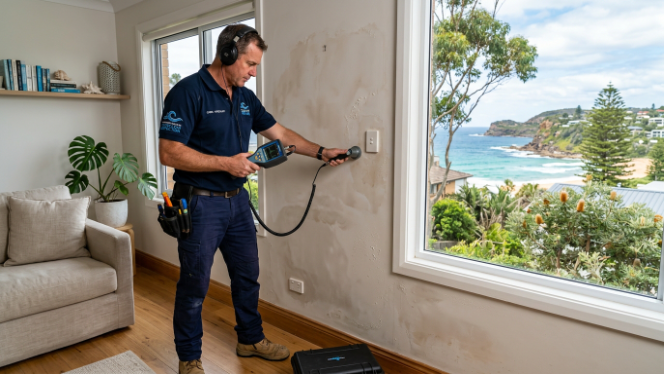
Plumbers use six main methods to find hidden water leaks without unnecessary damage. Acoustic listening devices detect the sound of escaping water through pipes buried in walls or under concrete. Thermal imaging cameras show temperature differences caused by leaking water. Tracer gas (hydrogen and nitrogen) escapes through leaks and is detected at the surface. CCTV cameras inspect the inside of drains and pipes visually. Pressure testing confirms which pipe section has a leak. Moisture meters map water saturation in walls and floors. Most leaks are found within 30-90 minutes using a combination of these non-invasive techniques.
- • Acoustic listening — ground microphone detects water hissing through pipe walls.
- • Thermal imaging — infrared camera spots hot/cold patches from leaking water.
- • Tracer gas — hydrogen/nitrogen gas injected into pipes, escapes through leaks, detected at surface.
- • CCTV inspection — waterproof camera fed into pipes to see cracks and breaks live.
- • Pressure testing — isolates pipe sections and checks for pressure drop over time.
- • Moisture meters — measure electrical resistance to map water spread through building materials.
6 leak detection methods
Professional plumbers typically use a combination of these methods. Each has strengths depending on the pipe material, location, and type of leak.
Acoustic listening devices
The most common tool. A plumber places a ground microphone on the surface above the suspected pipe run and listens for the sound of water escaping. Pressurised water making a hole creates a distinct hissing or rushing sound that travels through the pipe and the surrounding material. Modern digital acoustic sensors can filter out background noise (traffic, wind, household sounds) and amplify the leak frequency. This works best for pressurised pipes — the higher the pressure, the louder the leak sound.
Thermal imaging cameras
Also called infrared thermography. A thermal camera detects temperature differences on surfaces. A water leak behind a wall, under a floor, or in a ceiling creates a cooler or warmer spot compared to the surrounding area — depending on whether the water is hot or cold. This is especially effective for hot water pipe leaks, where the temperature difference is dramatic. Thermal imaging is non-invasive: no holes need to be drilled until the leak is confirmed.
Tracer gas detection
Used for leaks that are too small for acoustic detection or in locations where thermal imaging cannot reach (e.g., under concrete slabs). The plumber fills the pipe with a mixture of hydrogen and nitrogen gas (95% nitrogen, 5% hydrogen — non-toxic and non-flammable). The gas escapes through any leak and rises to the surface, where a sensitive gas sniffer detects it. This method is extremely precise — it can locate a pinhole leak within centimetres.
Video camera inspection (CCTV)
A waterproof camera on a flexible cable is fed into the pipe through an existing access point (clean-out, sink drain, toilet removal). The camera transmits live video to a screen, letting the plumber see cracks, breaks, displaced joints, or root intrusions in real time. This is the primary method for underground drain leaks but is also used for water supply pipes in accessible areas. The camera also records the pipe condition for insurance claims.
Pressure testing
A simple but effective diagnostic method. The plumber isolates a section of pipe, attaches a pressure gauge, and pressurises the system. If the pressure drops over a set period (typically 15-30 minutes), there is a leak in that section. By isolating different zones and retesting, the plumber can narrow down which pipe segment contains the leak. This does not pinpoint the exact location but confirms which circuit is affected.
Moisture meters
A handheld device with two pins that measures the electrical resistance of a material — dry material has high resistance, wet material has low resistance. Plumbers use moisture meters on walls, floors, and ceilings to map the extent of water saturation and trace it back to the source. This is often used alongside thermal imaging to confirm that a suspicious thermal spot is actually moisture and not a pipe that is warm for another reason.
What you should do first
Before calling a plumber, do the 30-minute meter test described in our high water bill guide. If the meter confirms a leak, check the obvious visible sources first — dripping taps, running toilets, outdoor taps, and irrigation systems. If you find and fix one of those, recheck the meter. If the meter still shows flow, or if you cannot find any visible source, you need professional leak detection.
Write down when you first noticed the high bill, whether the leak is constant or intermittent, and whether you have any suspicious damp patches, unusually green grass, or warm spots on the floor. This information helps the plumber choose the right detection method.
When to call a plumber
Call a leak detection specialist if your water bill confirms a leak but you cannot see the source, if you have a warm spot on the floor (hot water leak under slab), if water stains appear on walls or ceilings with no obvious roof or pipe leak above, or if you hear running water when all taps are off. The longer a hidden leak runs, the more damage it causes — and the more expensive the repair.
We combine acoustic detection, thermal imaging, and tracer gas to find leaks with surgical precision. We also use CCTV drain inspection for underground drain leaks. Our no-find-no-fee guarantee means you only pay if we locate the leak. Same-day service available across the Northern Beaches.
Northern Beaches considerations
Hidden water leaks on the Northern Beaches have specific patterns depending on your suburb. In Manly and Dee Why, the most common hidden leaks are in underground irrigation pipes and outdoor tap lines. The sandy soil in coastal areas drains water quickly, which means a leak can run for months without surfacing — the only sign is the water bill.
In Mosman and Balgowlah, slab leaks (water pipes running under concrete slab floors) are the most challenging detection jobs. Reactive clay soils shift under the slab over time, stressing copper pipes until they develop pinhole leaks. Thermal imaging is the primary detection method here, as the warm water creates a visible thermal signature through the concrete.
For strata properties on the Northern Beaches, a single hidden leak can affect multiple units through shared wall cavities and slab penetrations. If you manage a strata building with a rising water bill, call a leak detection specialist before the water damage spreads to lower levels — the detection cost is minimal compared to a multi-unit remediation.
Frequently asked questions
Do you have to break walls or dig to find a leak?
Not initially. We always start with non-invasive methods — acoustic listening, thermal imaging, and tracer gas — to pinpoint the leak location within centimetres before opening anything. In many cases, we can access the pipe through an existing opening (a clean-out, a removable panel, or by pulling up a single floorboard). We only break concrete or open walls after we know exactly where the leak is, which keeps damage minimal.
How long does leak detection take?
Most residential leak detection jobs take 30-90 minutes. A simple leak in an accessible pipe might be found in 15 minutes. A leak under a concrete slab with complex pipe runs could take 2-3 hours. We charge a fixed detection fee that covers the full diagnosis — you know the cost upfront before we start.
Can all leaks be detected without digging?
The vast majority can be located with non-invasive methods. Tracer gas and acoustic detection can pinpoint leaks through concrete, asphalt, tiles, and soil. The only time digging is unavoidable is when we need to confirm a very small leak that the non-invasive methods suggest but cannot precisely locate — but even then, the dig is a small, targeted hole rather than a trench.
How much does professional leak detection cost on the Northern Beaches?
Professional leak detection typically costs $150-$400 depending on the method and complexity. This fee is usually deducted from the repair cost if you proceed with the same plumber for the fix. We offer a no-find-no-fee guarantee — if we cannot locate the leak, there is no charge. This is rare, but it covers cases where the leak has stopped or was misdiagnosed.
Think you have a hidden water leak?
We find leaks without breaking floors or digging trenches. Thermal imaging, acoustic detection, and tracer gas. No find, no fee. Call now or book online.
Related reading
- Why Is My Water Bill Suddenly So High?— The first sign of a hidden leak is usually the water bill.
- CCTV Drain Inspection: When Do You Need One?— The primary method for finding underground drain leaks.